A radical reframe for women who are done letting a scoreboard run their lives.
Here's a question nobody asked you when you were growing up: What if the whole framework is wrong?
Not just the standards. Not just the bar you're being held to. The entire system of measurement itself — the one that sorts every experience of your life into a win column or a loss column, enough or not enough, success or failure.
What if that system — the one you've been running on so long it feels like oxygen — is actually the thing that's been quietly suffocating you?
We Were Taught to Keep Score
From the moment we could understand language, we were handed a scoreboard.
Good girl. Bad girl. Passed. Failed. Promoted. Overlooked. Thin enough. Too much. Not enough. Successful. Disappointing.
By the time we hit midlife most of us are exhausted — not just from the doing, but from the relentless evaluating. Every experience filtered through the same anxious question: was that good enough? Did I succeed? What does this say about me?
It's like trying to watch a sunset while simultaneously grading it out of ten.
You miss the whole thing.
The Morning I Couldn't Run 250 Metres
In the summer of 2025 I laced up my running shoes and attempted to run around the lake.
I made it 250 metres before I had to stop.
Now here's where the old operating system would kick in: failure. Evidence that it's too late, that you left it too long, that maybe this just isn't for you. The scoreboard speaks. You lose.
But here's what I actually thought: interesting.
Not as a consolation prize. Not as toxic positivity dressed up in leggings. Genuinely, curiously — interesting. My body had a story to tell me. My lungs had information. That 250 metres was data, not verdict.
I didn't start running to get a time. I started running to find out what was possible. To feel my own edges. To be alive in my body in a way I hadn't been in years.
That reframe changed everything.
Racing Without a Scoreboard
I run races now. Actual races with clocks and finish lines and all the apparatus of measurable achievement lined up and ready to judge.
And I genuinely, honestly do not race for a time.
I race to experience the challenge. To feel what happens in my body at kilometre 30 when everything starts negotiating with everything else. To be surrounded by other humans who also showed up for something hard. To run through volcanic terrain or mountain passes or city streets and think — I am here. I am actually, fully here.
The clock is running. I just don't let it run me. It’s data not determination.
This isn't indifference to growth — I train hard, I show up prepared, I push my edges. But the meaning I make from the experience has nothing to do with whether I hit an arbitrary number on a watch.
When we unhook meaning from metrics, something extraordinary happens. The experience itself becomes enough. More than enough. It becomes the whole point.
The Radical Act of Opting Out
What would change if you applied that same reframe to the rest of your life?
Not to lower your standards. Not to stop caring about growth or contribution or becoming. But to stop letting a binary judgement — success or failure, enough or not enough — be the lens through which you make meaning of your experiences.
Because here's what that scoreboard actually costs you:
It costs you presence. You can't be fully in an experience while simultaneously evaluating whether it's going well enough.
It costs you curiosity. Curious people don't experience failure — they experience data, plot twists, interesting. But curiosity requires safety, and the scoreboard is never safe.
It costs you the stories. The richest experiences of a human life are rarely the clean wins. They're the messy middles, the unexpected detours, the moments you found out something true about yourself in the last place you expected to.
And it costs you aliveness. That particular quality of being fully, electrically present to what is — not what should be, not what you're being graded on. Just what is.
Experience and Story as a Different Framework
What if instead of sorting your life into wins and losses, you sorted it into experiences and stories?
Every experience teaches you something. Every story becomes part of who you are. Neither requires success to have been worth having.
The career that ended. The relationship that transformed. The creative project that went nowhere. The body that surprised you. The path that took a sudden turn in 2012 when you left everything you knew and stepped forward into absolute uncertainty with nothing but the conviction that forward was the only honest direction.
All of it — every single bit of it — is the material you're made of.
Success and failure rarely enters my mind anymore. Not because I've become indifferent to outcomes, but because I've become far more interested in what I'm experiencing and becoming along the way.
The journey is a series of steps. One foot in front of the other. And it's the experiences and stories you gather along the way that help you become.
Not the medals. Not the metrics. Not the scoreboard. The medals hanging on my wall are a reminder of the stories - the people I chatted with on the journey for instance.
You.
An Invitation
I want to feel ALIVE until I'm dead.
Not optimised. Not achieving. Not winning by someone else's definition of the word.
Alive. Curious, present, in wonder, laughing at the absurdity and beauty of being here at all. Fully in contact with my own heartbeat and limits, with nature, with other humans, with the extraordinary texture of a life being lived on purpose.
That's the radical act I'm inviting you into.
Not a programme. Not a framework. Not ten steps to success redefined.
Just a question, offered with genuine curiosity:
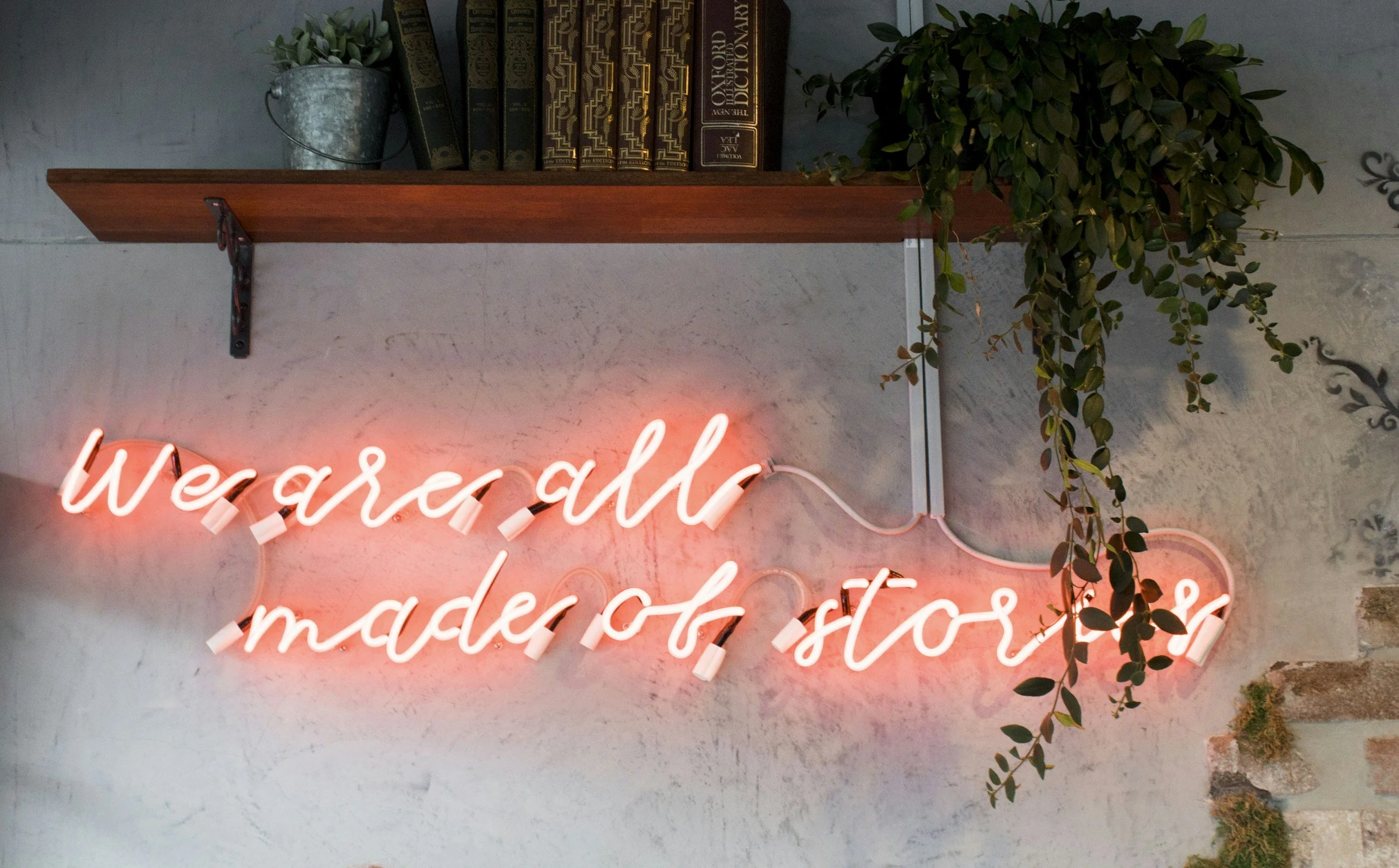
What would change if you stopped keeping score — and started keeping stories instead?
Glenda Myles is a psychotherapist, yoga therapist, and the founder of True North Co. — a space for midlife women who are done shrinking and ready to live (mind)fully. She's still figuring it out, one step at a time.