

How to Change - Book Club
What to Expect
❋ InvestmentThe cost to participate is $10 plus the book which you can probably find at your local library.
About the Book Club:
In our first season, our conversations focus on our capacity and our GRIT. What better way to start it then a book club on How to Change by Katy Milkman. We will also weave in dialogue from GRIT by Angela Duckworth, and other behavioural change research. The book club will be accessible and pragmatic. Where Katy’s book give us a pathway to our first 90 days, we will also weave in Angela Duckworth’s work on GRIT that will take us through the year and beyond.
❋ Intentional StructureWe cover two chapters a week but you can easily expand this to cover two weeks or longer. Go at your pace!
❋ Live Sessions EnergyIn a hybrid format, live and recorded, we will have time to connect to each other and the content during live sessions at the beginning and end. In between additional video and supportive exercises will be provided to keep us moving forward.
❋ Expert FacilitationLed by experienced guides who know how to hold space, encourage participation, and keep things moving with purpose.
❋ A Supportive SpaceOur events prioritize comfort, safety, and respect—so you can show up as you are and fully engage in the process.
About the Book:
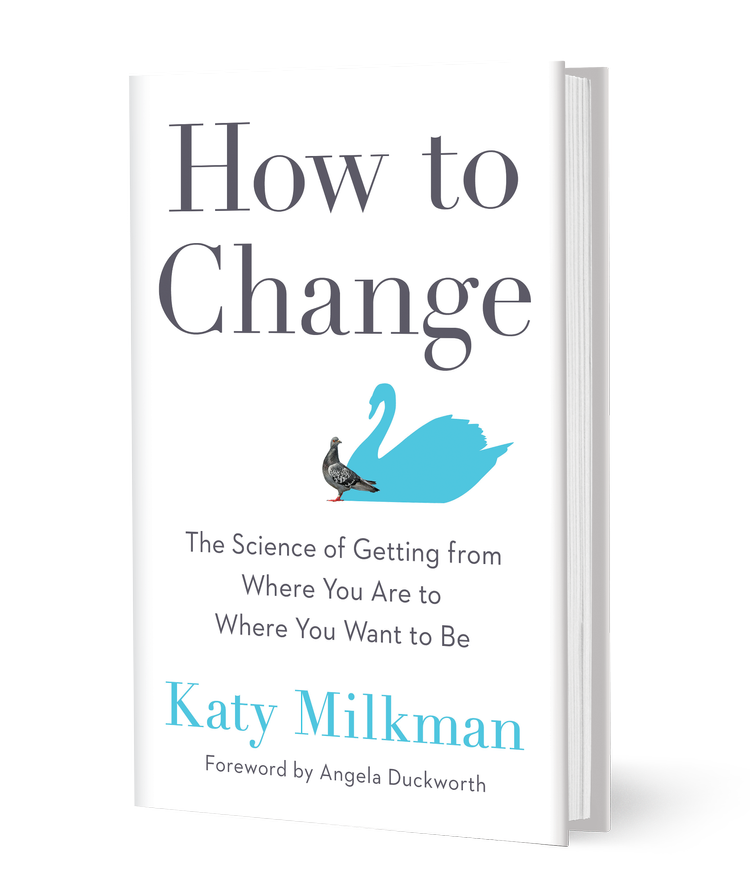
Award-winning Wharton Professor and Choiceology podcast host Katy Milkman has devoted her career to the study of behavior change. In this national bestseller, Milkman reveals a proven path that can take you from where you are to where you want to be, with a foreword from psychologist Angela Duckworth, the best-selling author of Grit.
Change comes most readily when you understand what’s standing between you and success and tailor your solution to that roadblock. If you want to work out more but find exercise difficult and boring, downloading a goal-setting app probably won’t help. But what if, instead, you transformed your workouts so they became a source of pleasure instead of a chore? Turning an uphill battle into a downhill one is the key to success.
Drawing on Milkman’s original research and the work of her world-renowned scientific collaborators, How to Change shares strategic methods for identifying and overcoming common barriers to change, such as impulsivity, procrastination, and forgetfulness. Through case studies and engaging stories, you’ll learn:
Why timing can be everything when it comes to making a change
How to turn temptation and inertia into assets
That giving advice, even if it’s about something you’re struggling with, can help you achieve more
Whether you’re a manager, coach, or teacher aiming to help others change for the better or are struggling to kick-start change yourself, How to Change offers an invaluable, science-based blueprint for achieving your goals, once and for all.
Taken from her website: https://www.katymilkman.com/book
Week OneGetting Started & Impulsivity
You know that thing where you have the best intentions on Sunday night, but by Tuesday afternoon you're elbow-deep in a bag of chips wondering where your willpower went? That's not a character flaw—that's impulsivity doing its job. This week, we're mapping out why "future you" keeps getting hijacked by "right now you," and how to use fresh starts (not just January 1st) to actually make your 2026 goals stick. You'll leave with your behaviour locked in and a temptation bundle that makes doing hard things weirdly enjoyable.
We will meet live to also get to know each other, I’ll layout the full month together and what you can expect, and you can ask any questions.
Live Meeting via Zoom 6:30pm CT/7:30pm ET

Week Two & ThreeWeek Two: Procrastination & Forgetfulness
Let's be honest: you're not forgetting to do the thing because you don't care. You're forgetting because your brain is running 47 other tabs and "future you" seems like someone else's problem. This week tackles why you delay what matters and how to design your life so starting becomes stupidly easy. We're building "when-then" plans that remove the negotiation ("Should I? When? Maybe later?") and creating reminder systems that actually work. Less thinking. More doing.
Week Three: Laziness, Confidence & Self‑Doubt
Plot twist: You're not lazy. You're exhausted from fighting your environment and the stories you keep telling yourself about what you can't do. This week, we're reframing "laziness" as energy management and digging into those sneaky self-doubt scripts ("I'm not an athlete," "I'm not consistent," "I always fail"). You'll redesign your space to make your behaviour easier and collect hard evidence that contradicts the lies you've been believing about yourself. Bring tissues—this one hits different.
Recorded Video, Prompts and an exercise to help you navigate the topics and consider the content. Group Chat available 
Week FourConformity & Changing for Good
Here's the thing about change: you can white-knuckle your way through it alone, or you can design support systems that carry you when motivation disappears. This week is about harnessing social norms (yes, even peer pressure can work for you), building accountability that doesn't feel like micromanaging, and creating your personal "How I Change" playbook. By the end, you'll have a one-page manual of what actually works for you—no more starting from scratch every time you want to do something hard.
We gather live this week to explore the final two chapters, talk about the book as a whole, what's missing in terms of change science, and what's next. No worries if you didn’t get through it all. Come anyways. 6:30pm CT/