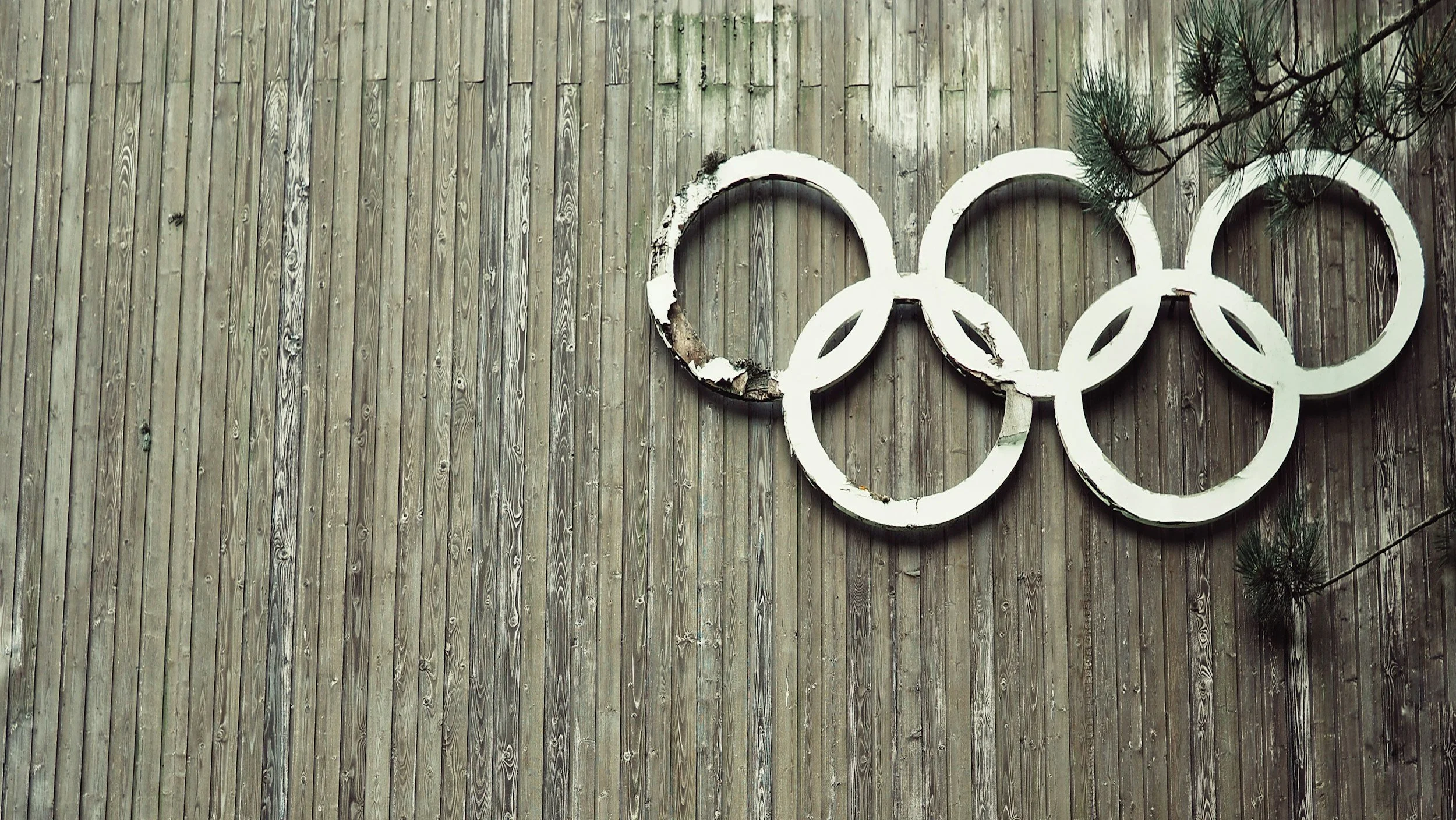
What the 2026 Winter Olympics is teaching us about what's actually possible after 40.
Let's talk about what happened in Milano Cortina.
As of last week, the 2026 Winter Olympics are underway in the Italian Alps. And if you've been watching — really watching, not just catching medal highlights — you might have noticed something quietly extraordinary happening on the slopes, the ice, and the bobsled tracks.
Women in their 40s are showing up. Competing. Winning. And refusing — loudly and unapologetically — to be told their time is up.
We need to talk about this. Because it matters far beyond sport.
Meet the Women Who Didn't Get the Memo
Elana Meyers Taylor, 41, won gold in the women's bobsled monobob at these Games — her sixth Olympic medal at her fifth Olympics. She is now the most decorated American Black female bobsledder of all time. Oh, and she's a mother. She did this while being a mother. And she hugged her nanny after winning.
Kaillie Humphries, 40, won bronze in the same event — her fifth Olympic medal. Also a mother. Also competing at her fifth Olympics. The two women were dubbed "bobsled moms" by the press, which is simultaneously a beautiful acknowledgment and a wild understatement of what they've accomplished.
Lindsey Vonn, 41, came back from a six-year retirement — not because she had to, but because she wasn't done. She qualified for these Games while managing a knee replacement and a ruptured ACL suffered just nine days before the Opening Ceremony. She stood in the starting gate anyway. She crashed early in the race and fractured her leg. And her first public statement from her hospital bed was: "I have no regrets. Standing in the starting gate was an incredible feeling I will never forget."
Not a consolation prize. Not a polished PR statement. A woman telling you exactly what it means to show up for your own life on your own terms.
The US team at these Games ranged in age from 15 to 54 years old. Fifty-four. Competing at the Olympics. The oldest Canadian athlete with the most compelling story is Deanna Stellato-Dudek, 42, a figure skater who made her Olympic debut at these Games — having retired from the sport for 16 years before returning at age 33. She is the oldest woman to compete in Olympic figure skating since 1928. Canada deliberately bet on experience, with their women’s hockey team roster averaging around 30 years old — older than the US team, and they're in the gold medal game today as I write this (fingers crossed). Worth noting is that Natalie Spooner gave birth in December 2022, was back on ice within four weeks, and scored the opening goal at the World Championship just four months postpartum — with her infant son watching from the stands. She was named the IIHF Female Player of the Year in 2024 and is playing today in the gold medal game (as I write this).
The Story We Were Told About Women and Age
Here's the thing. We were handed a very specific story about what happens to women after 40.
Our bodies start to betray us. Our best years are behind us. We should be graceful about stepping back, making room, winding down. The culture has a whole vocabulary for this transition — words like "aging gracefully" that sound like compliments but function more like instructions. Shrink quietly. Don't make a fuss. Certainly don't show up at the Olympics with a ruptured ACL and zero regrets.
Most of us absorbed this story so completely that we don't even recognize it as a story anymore. It just feels like reality.
But here's what Elana Meyers Taylor winning gold at 41 is telling you: it was always just a story.
What This Has to Do With Your Life
Now, I'm not suggesting you train for the Olympics. (Although — why not? The curler Rich Ruohonen competed at Milano Cortina at 54, so we're officially out of excuses on the age front.)
What I am suggesting is this: the same cultural narrative that told Lindsey Vonn she was too old, too broken, and delusional to try — is the exact same narrative whispering to you that it's too late to start. Too late to change. Too late to begin the thing you've been circling for years.
That voice knows your name. It's personalized it just for you.
Too late to start running. Too old to learn something new. Too far gone to get fit. Too much has happened. Too many years wasted. Too risky to try now.
The 40-somethings on the Olympic podium in Italy this week didn't silence that voice. They just stopped letting it make decisions for them.
Becoming Is Not Age-Restricted
Here's what nobody puts on the inspirational poster: becoming doesn't have an expiry date.
The research backs this up — and it's more radical than you might expect. Studies consistently show that humans are capable of significant physical adaptation well into their 50s, 60s, and beyond. The cardiovascular system responds to training. Muscles grow. Neural pathways form. The body, given the chance, is remarkably willing to become something it hasn't been before.
But the becoming isn't just physical. It's psychological. It's the slow, sometimes terrifying process of deciding who you are now — not who you were at 25, not who you were told you'd be by now — but who you are becoming in this particular season of your life.
Midlife isn't the beginning of the end of that process. For many women, it's where it actually starts. The kids are older, or gone. The career has taken a shape. The marriage has revealed its true nature. The performing-for-everyone-else energy starts to quiet down. And in that quiet, sometimes for the first time, you can actually hear yourself think.
What do I actually want? What have I not tried yet? What would I do if I stopped waiting for permission?
The Permission You've Been Waiting For
You're not going to find it where you've been looking.
Nobody is going to show up and officially announce that you are, in fact, old enough and wise enough and worthy enough to begin. The culture certainly isn't going to do it — the same culture that called a 41-year-old Olympic athlete "too old" and "delusional" for showing up is not going to be your cheerleader.
The permission has to come from you. And it looks less like a grand declaration and more like a quiet decision made on an ordinary Tuesday that you're going to step forward anyway. Into the thing that scares you. Into the version of yourself that's been waiting.
Lindsey Vonn stood at the top of an Olympic downhill course with a ruptured ACL, knowing full well what could happen, and pushed off anyway. Not because it was safe. Not because it was sensible. Because she wasn't done yet.
You don't have to be done yet either.
One Question Worth Sitting With
If age isn't the barrier — and the 2026 Winter Olympics are making a fairly compelling case that it isn't — what's actually stopping you?
Not rhetorically. Actually. What's the real thing?
Because that's the conversation worth having. That's where the becoming starts.
True North Co. exists for women in midlife who are done waiting for the right time and ready to find out what they're actually capable of.
Because you're not lost. You're becoming. To Live Life (Mind)Fully.